


After crossing the whole of Europe and Asia, our reggae world tour continues in the Indian Ocean, where we make a stopover on the island of La Réunion. An imposing, ever-present, living natural world, the rhythm of life and the conviviality of the Réunionnais, the constant mingling of peoples, cultures and traditions… La Réunion is an ideal place to carry on with our worldwide panorama of reggae.
Jamaican artists are not mistaken and love to come and play on this rock off the coast of Madagascar, or even to spend some time there, like Cedric Myton (The Congos). The list is long of those who have come to end a tour or take a break from their mainland French dates: Burning Spear, Steel Pulse, U-Roy... and Groundation every year. Recently, Raggasonic, Julian Marley and Beenie Man all stopped off on the island, performing at the Kaloo Bang festival. We can also mention the Sakifo in Saint-Pierre, the stage at Ravine de Saint-Leu and the Palaxa in Saint-Denis, which have hosted plenty of concerts over the years.
With a long history behind it, the Réunionnais reggae and dancehall scene is very rich. Since the end of the 1980s, the first activists have never stopped developing the local scene. Many sound systems allow young people to find their feet in front of an audience: the forerunner Vince with the Ker Faya sound system, but also Bass Kultur, Lightning Sound and Community. After Radio Pikan and Radio Vie, which offered programmes for several years, reggae still lives on the airwaves thanks to Inity-I Station, and also Daddy Têtard on Vellymusic, who has been on air for nearly 15 years. By the sea or in remote mountain corners, in the villages or at “kabars”, impromptu moments of sharing in the midst of nature, Réunionnais reggae shows great vitality. For the occasion, we went to meet not one but three artists: DJ Lokal, Ti Rat & Kaf Malbar and the band Toguna.

Now 45, DJ Lokal, aka Tanto Leon, still lives in his home town, Le Port. A big brother of the movement that started more than twenty years ago, he has launched, and still launches, new generations. “I was the first to bring the dancehall movement into the island's clubs and nightspots, the first to take young deejays and singers under my wing. Back then, I was the only one pressing vinyl and working with an international reggae label (JetStar, ed.).”
DJ Lokal was 16 in the early 80s. He was then hosting a show on Radio Frégate, one of the first independent radio stations in La Réunion. After hosting parties, mixing in bars and discos and opening for concerts, an association contacted him to teach music in prison. Alongside his workshops, DJ Lokal founded Ragga Force Filament with friends from the early days, Jacko Maron and Lord Jamblon. Their first album, with jungle, drum & bass, ragga and hip-hop sounds, came out in 1996. Soon afterwards, he met Mc Janick and began to take the mic. During this period, Lokal organised concerts, bringing over Sydney and later IAM and NTM. He set up Ghetto Prod with friends and began to perform with a sound system and to release underground mixtapes, and he exported his know-how to the neighbouring island, Mauritius.
A true pioneer, who takes a rather unflattering view of current production: “I find that here there is brainwashing on a large scale because of the radio monopoly. It's a pity for the people, but we know who the real ones and the fake ones are (…) Too many reggae bands never tackle the real problems our youths face. There's far too much hype and it calls itself militant!”
This founding figure of the local reggae scene now teaches at a school for DJs and in middle schools, and has set up Soldjah Band Crew Family, a collective of youths whom he supports and is preparing to go into the studio: “I believe knowledge should be shared and I expect nothing in return, apart from myself. 45 and still here!” A militant since his beginnings, DJ Lokal is still a reference and a landmark.
 The 90s saw the birth of the first Réunionnais roots reggae bands. Kom Zot, formed in 1991, comes out of maloya, the traditional, ancestral music. The band is very popular and opened for Aswad, Culture and Lucky Dube, among others. After a collaboration with Albert Griffiths, the group took part in the Gladiators' last tour and launched its own label, MaronRprod. Having also worked with Tyrone Downie, Kom Zot remains an integral part of the island's musical landscape.
How could we not mention the band Natty Dread? A true roots sound, lyrics advocating peace and tolerance... The early days of the group, founded by two brothers, Jean-Marc and Jean-Marie, in 1992, were not easy, but they helped forge the band's unity. Acclaimed in the Indian Ocean, they were won over by Africa and Mali, where they collaborated with Manjul in 2004. Before moving his Humble Ark to Bamako, Manjul had left Paris to settle in Saint-Leu, in La Réunion. Fred Le Dar, Nora, Persepolis and Na also tried their hand, and have counted and contributed to the Creole reggae scene.
Kom Zot – Kaz Maron


Ti Rat welcomes us in the middle of nature, at his home in Ste Anne, a small town in the east of the island. “In his Zion”, as he likes to call it, conviviality is the watchword. This does not mask a fiery, protesting message. “Rouge Reggae is alternative Rastafari, against Babylon, against the big corporations of this world (…) On this island, there is an unfair distribution of wealth and social gains, and reggae had to take stock of that!” This will therefore be the leitmotif of his message, set to music by Rouge Reggae. The band was born in 1994 and denounces a two-tier society, the erosion of social gains, the difference in treatment between the various strata of the population. Its lyrics advocate a return to healthy values and a fight against the society that is being imposed, against excessive consumerism and its abuses. “We've lost assets that the elders handed down to us. What we see everywhere in our society now is nothing but Babylon fashion!” A radicalism that made the release of the first album difficult, but the band managed to win people over thanks to the stage and the support of the public.
Ti Rat & Rouge Reggae - Pasteur Martin Luther King

With four albums to their name today, Rouge Reggae and their leader play regularly in France, but their greatest pleasure is to play at home, in their backyard in Ste Anne, in their own way and inviting whoever they like. “In La Réunion, we don't get the means you may have on the mainland for music. Here it's rough!” Ti Rat is also involved in organising the Uprising Roots festival, in the neighbouring town of Ste Rose, a free event where Johnny Clarke could be seen on stage this year, along with Isiah Shaka, a Montpellier native who did not hesitate to cross the 10,000 km separating Ste Anne from Montpellier. They met during Ti Rat's French tour in 2008. “We had a friend in common who suggested I promote him in Montpellier, at the concert venue where I work,” says Isiah Shaka.“In a family spirit, I put the band up at my place and strong bonds were formed.” Since then, every time Ti Rat & Rouge Reggae come through France, they play in Montpellier and its surroundings. Isiah Shaka made the reverse journey in 2013, invited by Ti Rat to perform at the Uprising Roots Reggae festival in Ste Rose. “I was able to discover the beauty of the island and its riches, but also to share the difficulties and problems the Réunionnais face daily: the high cost of living, unemployment, transport... Music holds a great place: hip-hop, reggae, maloya, souls need to express themselves in the face of the history of yesterday and today! This Creole blues and this revolt touch me because they live in me too.”

La Réunion has embraced reggae, certainly, but dancehall is not left behind. DJ Lokal's work, for example, opened the way for several artists. The most emblematic and best known of them is probably Kaf Malbar. We meet him in a place every musician on the island knows: the village jeune in Le Chaudron, which has seen the birth of many young artists in several disciplines (reggae, dancehall, hip-hop, graffiti and dance).
His welcome is simple, natural and warm. For Kaf Malbar's success has not changed him: “I'm a straight, upright guy, I have my feet on the ground (…) The secret to success, at least for me, is to do things by feeling. Music goes beyond everything else.” His starting point was meeting DJ Lokal at a workshop, where he discovered dancehall. He began writing his first lyrics in Creole and, on leaving, took the mic in his neighbourhood, the cité cow-boy in Le Chaudron, with his friend Babylusion. At that time, the CEDC collective was active there and James, one of the pioneers of the island's hip-hop movement, gave young people their chance. Kaf Malbar knew how to speak to them: “I think I was one of the role models for young people who wanted to get into music because I composed and sang in Creole. It fitted the language and the way of singing at the time.”.
Kaf Malbar – I vé mi less :
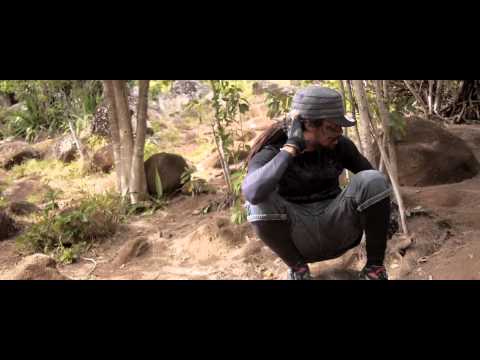
Yet his first album, released in 2001, was shaped for radio. Even his name was changed: he became KM David, which he did not like: “I told myself that if I had to bend to get into the system, I would, but once I was settled, it was up to me to be what I wanted and do what I felt like!” So he set things straight for the second album and decided to produce the third himself. Released last year, the album “Subliminal” may be his last. Kaf Malbar now wants to leave his tracks available for download on the Internet. This is the “Tombé du Camion” concept: “It's a great concept, I'm the only one doing it on the island! You give your sounds away for free and a trickle at a time, to the public and the radio stations, and that leaves you time to work. No more production and marketing problems and you fill your concerts!”
Kaf Malbar – Subliminal :


A fusion of reggae, rock, soul and folk, Toguna is a mirror of La Réunion, a land of cultural mixing. The band was born from the meeting of Sila, Daoud and Kingsley, who came respectively from France, from Le Port in the north of the island, and from Mauritius. “Toguna is the meeting of three different styles, which is what gives the band a special flavour”. In 2007 came the first album, which crossed the borders of the département: it even came out in Japan before reaching the shelves in La Réunion! After a tour of Australia, Japan and France, the second album was recorded in London. There were many encounters, and collaborations with Patrice, Xavier Rudd and Blue King Brown hint at an international future. With lyrics in English, the band does very well abroad. “We understood that we had to get off the island to make our music evolve, to bring different sounds and notes to it”. Toguna is currently finishing its third album, made entirely in their home studio and due out at the end of 2013.
Toguna – In Colours :

La Réunion is also the new generation:
Pix'l - Alé Aou :

Alaza – Nou Vé riddim

Coqlakour riddim volume 5 :

Ti Greg - Mighty Lion :

And also:
Malkijah - Pas à pas

Letoyo – Pachamama

Verzonroots – Celui qui conduit, c'est…

The Réunionnais scene is as rich as it is varied. If you're curious, we advise you to listen to Kultur Lamour, Loic Painaye, Black Nation, Elvijah and Miojah, Roots Band, Daddy Nesta and the Rocksteady Sporting Club, who keep reggae alive in La Réunion.
Report written by Benjamin Leboyer
Comments (16)
goree lenclume · · rating: 5 out of 5
goree lenclume · · rating: 5 out of 5
natyrouz · · rating: 3 out of 5
fred le dar ·
fred le dar · · rating: 2 out of 5
claurat · · rating: 5 out of 5
Don Pedro · · rating: 5 out of 5
Lo-jamaikin · · rating: 5 out of 5
Ben · · rating: 5 out of 5
MOUGLEE · · rating: 3 out of 5
MOUGLEE · · rating: 3 out of 5
cris · · rating: 4 out of 5
RasKran ·
Bulma · · rating: 5 out of 5
Pour la peine, les "reggae sessions" sont disponibles en podcast sur le site de radio Arc en Ciel, bonne écoute à tous!
Ben · · rating: 5 out of 5
vince · · rating: 4 out of 5