
It is hard to find your way through the jungle of reissues of roots reggae classics. This is partly due to the low-key nature of the original Jamaican releases dating from the 70s. Who would have said back then that the album "Rastafari Dub" would be considered a classic 30 years later and would be so precious? In the end, nobody. Let us try together to understand the winding path it has followed to reach us.
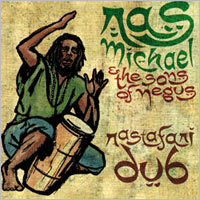
Ras Michael was born in 1943 in Kingston, in a Rasta community. By the early 70s he already had a good reputation in the Jamaican music scene. At the time, the Rasta message was spreading contagiously thanks to reggae and its committed lyrics. Carried by this new momentum, Nyabinghi* music, made of percussion inherited from Africa (the repeater, the funde and the bass drum), gradually found its place in the island's studios. Ras Michael first recorded as a percussionist for Clement "Coxsone" Dodd and was paid in recording sessions at Studio One. He thus produced his first tracks and became singer and leader of the group The Sons of Negus. In 72, he recorded and produced at Dynamic Sounds studios one of his first and best albums, the famous "Rastafari". Dub versions were then made to accompany its release. The album "Rastafari Dub" appeared between 72 and 74 (that is the closest approximation) on a white label and in very small quantities.
Then things get a little complicated: it came out again in 78 on Grounation in a showcase version (song + dub back to back). This version can be found on CD (Esoldun-Melodie 92) but beware of this reissue made from the vinyl with no effort whatsoever to restore the sound! Moreover, even though the tracks are from the same recording, the dubs are different and much worse. The effects are more numerous, disparate and the end result mediocre. We would have to wait until 89 and the release of the album on the ROIR label to finally get back to the original. Sure of the quality of this opus, ROIR even decided to release it again this year! Without making the slightest effort on the booklet. That is the main regret one can have. The credits are given for the album without details on the tracks. Moreover, nothing is said about the tracklisting. The track New Name is not on the album "Rastafari" but on "Kibir-Am-Lak". How did it end up here? The same question arises for No happens.
However, this does not in any way tarnish the musical quality of the opus. This album remains essential in the history of dub because it lies at the foundation of the meeting between reggae and Nyabinghi culture. Ras Michael's percussion glides happily over a bass and drums as dry and solid as rock. The dub approach is sober and groovy. It leaves plenty of room for the musicians present, including Robbie Shakespeare on bass, Peter Tosh on wah-wah guitar and Tommy McCook on tenor saxophone. The choruses and horn riffs drown in echo and lightly punctuate the martial march of the rhythm. These recordings have the strength and freshness of live. One thinks here of the Wailers tracks on the album "Talkin' Blues", which were recorded live for an American radio station at the same time (Sausalito, San Francisco, 73). In both cases, the sound is dry, almost funky. Never again in the history of reggae will subtlety and effectiveness be found combined in this way.
* Nyabinghi: This is the traditional Rasta rhythm. It accompanies the "Grounations": musical trances in which the emperor is praised with force. Gathered on the hilltops ("Up In The Hills"), the musicians and guests take turns day and night to keep the ceremony going.