


From aspiring deejay to dancehall superstar, then public enemy number one and finally prisoner, Vybz Kartel's trajectory is an unusual one. Armed with his technique and his extraordinary writing, he ushered dancehall into a new era.
As an artist, he pushed the limits of the genre in (almost) every area, taking on every subject. Above all, he moved the goalposts beyond music. Fond of controversy, Vybz Kartel embarked on a strategy of permanent scandal: both where he was expected and, above all, where he was not, no taboo was spared in his long list of provocations. An attitude theorised by the phrase “Expect the unexpected”.
Dancehall genius or dangerous agitator, consummate master of the wrong-footing move or relentless opportunist, Vybz Kartel stirred up passions on his island and beyond, right up to the fall of the Empire he had built on his talent. A look back at a career full of contrasts.
PART 1 – NEW MILLENIUM (2002-2005)
“It's the new millennium / Something new is about to happen / Marshall and Kartel are going to generate a storm.” Ego trip? Megalomania? On this combination with Wayne Marshall, New Millenium, Vybz Kartel is sure of his strength: at the dawn of a new millennium, nothing can stand in his way. New Millenium is something of a statement of faith, the signature track of an apprentice star who fully intends to leave his mark on the new millennium. And the Mad Ants riddim gives him his first big hit. Vybz Kartel's launch into orbit is inseparable from that of a young producer, Donovan Bennett, who was not yet called Don Corleon: “The first time I met Vybz Kartel, it was for dubs. I then put him on the Mad Ants riddim, on his own at first. He was doing the chorus and I said to him: 'No, we're going to get Wayne Marshall to sing'. I erased his part and that's what we did.” The result was New Millenium with Wayne Marshall in 2003.
The previous year, the Stone Love sound system had even awarded him the honorary title of deejay of the year 2002. Unlike the many wannabe artists Jamaica churns out every year, Kartel was already 26 when he received this first distinction. By that age, he had been through the usual lot of any aspiring deejay. Vybz Kartel grew up in Portmore, separated from Kingston by the harbour and the immense docks. Lt. Stitchie, Ninjaman, Papa San, Will Smith and KRS-One are the influences he confesses to, forging his hybrid style, heavily influenced by hip-hop. In 1993, he recorded his first single (Love Fat Woman, for Alvin Reid) under the name Adi Banton, in reference to Buju Banton. In 1996, he formed the trio “Vybez kartel” with Mr. Lee and Escobar, then kept the name (slightly modified) when the group split up. In 1998, he made his mark on the stage of Champions in Action (an event organised by Christopher “Dudus” Coke, the godfather of West Kingston – a name that will come up again) and was spotted the same year by Bounty Killer. He joined his crew, the Alliance, and served his apprenticeship writing songs for the Warlord (High Grade Forever, Warlord Rule The World, Gal Clown and the Scare Dem Crew: take-off was imminent.
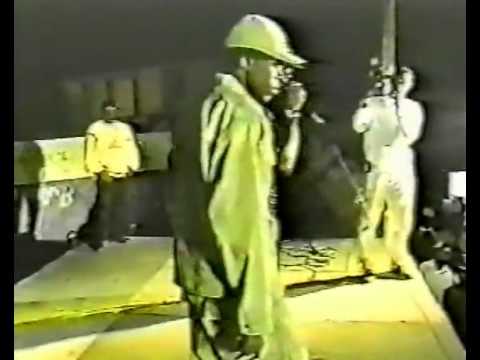
“We were crazy and young, real hotheads”
New Millenium is also the starting point of a long joint adventure with Donovan Bennett. It was he, in fact, who christened him, in the intro to Mad Ants: “Yo, Don Corleon, the girls dem feeling for you only.”. Bennett challenged him: “Hey, what's this Don Corleon?” Kartel's answer: “But it's you! You're our Marlon Brando!” Their fruitful collaboration continued with Why Yuh Doing It (Krazy riddim), again with Marshall, then with Sweet To The Belly on the Egyptian riddim (Blaxx Music). “Back then, we were crazy and young, real hotheads, recalls Don Corleon. For example, when I composed the Egyptian riddim, I was in my studio at 11 at night programming the rhythm and I had the idea of putting Indian tablas in it. A friend had given me a CD with tablas on it. I built the rhythm, I played the bass. And I found this girl's voice on the CD, I sampled it and re-sampled it. Kartel started laughing, he had the lyrics for Sweet to the Belly, it was deadly!” From then on, nothing would stop Adidja Azim Palmer.

Vybz Kartel's talent did not escape his peers. Wayne Marshall remembers being lastingly impressed by the deejay's potential: “When we met Kartel, we saw him as an immense hope for the future. His wordplay and his work ethic were admirable.” Everyone who rubbed shoulders with him stresses his obvious talent. A few years later, in 2010, the American producer Dre Skull (Mixpak Records) travelled to Jamaica to record Vybz Kartel, who did not miss a single match of the football World Cup, then in full swing. Dre Skull says on his blog that he had never seen an artist record like him: “Within ten minutes, he had worked out complete phrases and the melody. He cared neither about the order of the phrases nor about that of the melody fragments: he could do the fourth bar of the chorus before going back to the first three. Things like that. The song took shape quickly. As well as writing the lyrics and the melody, he also heard the mix of the song in his head, and he gave Notnice instructions to double this or that word. In an hour and a half, the song was finished.”
“A virtuosity on the level of Robert Johnson”
During the recording, Dre Skull noticed that Vybz Kartel was able to repeat a phrase on a second or third take exactly the same way as the first: “It was incredible to watch: if he made a mistake on a word, he would go back and re-record the previous phrase. On the computer, the waveform of this new take was exactly the same as the previous one – the shape of the words, the volume, everything exactly identical. I knew Kartel was a master of his craft, but this is a virtuosity on the level of Robert Johnson.” For another track, the instrumental was built for twelve-bar verses: “He started by recording the twelfth one first. He listened to it, then went back and recorded the eleventh bar, then the tenth… He literally wrote and recorded each bar in reverse order to build the verse.”
Kartel closed 2003 with the release of his first album, “Up 2 Di Time” (like the catchphrase he constantly drops), on Greensleeves. Innovative riddims, devastating humour, finely chiselled rhymes, acrobatic wordplay, brilliant metaphors and staggering technique: Kartel ushered dancehall into a new era.
In December, at Sting, his clash with Ninjaman turned into a brawl. When it was announced shortly afterwards that Bounty Killer would not be taking the stage, chaos broke out. Stones and bottles thrown, gunshots, injuries and arrests… The next day, the Gleaner ran the headline: “Terror at Sting”. Vybz Kartel apologised to Ninjaman and the Sting promoters, all under the eye of the mainstream media. All of Jamaica now knew the name of Vybz Kartel.

His rise continued at the speed of his wordplay and polysyllabic (de)constructions. He was on every riddim, at every show and worked with every producer: Donovan “Vendetta” Bennett (Don Corleon), Cordel “Scatta” Burrell, Arif Cooper, Christopher Birch, Patrick “Roach” Samuels… He was also on every subject: gun tunes (Real Deal), ganja tunes (Full Up Of Grass, High Vibe) and sex tunes (Pussy Jaw, No See Nothing, Proper English, Picture This), the usual triptych. Kartel also proved a scathing political commentator (Politics, Mr Politician). On Emergency, he puts a few thorny questions to “Bruce” (Golding) and “Mr. PJ” (Patterson): “Mr. Bruce, Mr. PJ / This is just a couple question from Addi the deejay / [Question:] Kingston mek no AK? / [Question:] How gun come inna JA? / Who own the wharf and the airport, the docks and the bay? ”
Everything passes under the fire of his irony, including the most varied subjects such as mobile phones (Hello Moto), and even Beyonce's hip movement (Beyonce Wine). There is one last subject Vybz Kartel holds especially dear: diss tunes, attacks on Ninjaman, Assassin, Spragga Benz, and soon Bounty Killer and Mavado, and the whole Alliance along with them (Aidonia, Busy Signal and even Bling Dawg, who was nonetheless very close). He can write about anything, but he still has his preferences: sex and guns. As his fame grew, his lyrics began to attract attention. Between the explicit and gratuitously filthy rhymes, the glorification of violence and the avowed homophobia, Vybz Kartel racked up grievances. In the running for the 2004 MOBO Awards (Music of Black Origin Awards) in England, he and Elephant Man were eventually removed from the list of contenders for best reggae act following lobbying by the LGBT association OutRage!, which denounced their homophobic lyrics (it was ultimately Sean Paul who took the trophy). It was around this time that his US visa was withdrawn, and he would never get it back.
PART 2: START WAR AND DEAD (2006-2008)
For having sung with D'Angel, Bounty Killer's ex-girlfriend who was then engaged to Beenie Man, his sworn enemy, Vybz Kartel incurred the wrath of the Warlord. There cannot be two bulls in one arena: Kartel left the Alliance (followed by Aidonia, who would record the song Adid A Mi Daddy Who Wa Vex Wan Vex) and founded his own group: the Portmore Empire. The deejay Deva Bratt would later claim that he was the original founder of the Portmore Empire but that Vybz Kartel had officially registered the name without his knowledge.
Now dismantled, the Portmore Empire then brought together Popcaan, Gaza Slim, Shawn Storm (also sentenced to life), Sheba, Lisa Hype, Gaza Kim, Black Ryno and Jah Vinci (who would leave the crew), and later Tommy Lee. Vybz Kartel was the leader and mentor of all these budding artists. “I learned almost everything from Vybz Kartel, Popcaan told us in 2012. He's a guy who really takes music seriously, who works very seriously, both to perform on stage and to record a song.” Aidonia, who has since founded his own group, also remembers what he owes to Kartel: “He was the first to encourage me, to tell me to persevere with my style without changing anything and that one day I would find success too. When he came back from touring abroad and saw me struggling, he always gave me a bit of money. He started calling me up on his shows, urging certain producers to record me, certain selectas to play my tunes at parties… He introduced me to Bounty, telling him I had a crazy flow, we started to be all together…”

Pushing the provocation, Vybz Kartel turned up at D'Angel and Beenie Man's wedding (there was even talk of him joining the Doctor on his Mafia House label). This is where his opposition to Mavado, a recruit of the Alliance, took root. For months, the Gully God and Addi The Teacha (his new nickname, to get around his three-album contract with the Greensleeves label, which had just released “JMT”) attacked each other with ever more insulting singles. Behind the Kartel / Mavado clash was the opposition of Gaza (the name Kartel gave to his Portmore neighbourhood) against Gully (a ghetto within the ghetto of Cassava Piece, where Mavado comes from). Over the months, this rivalry spilled into the streets and school playgrounds, spread to the neighbouring islands and took a worrying turn when shootings broke out between the two camps. Both artists were regularly named by the police as “persons of interest”.
In March 2007, they gave a press conference at the government's initiative. Under the eye of the Deputy Commissioner of Police, they showed their unity, called for a ceasefire and apologised to their fans. It must be said that the climate was heavy in Jamaica that year: 2007 would total 1,574 murders. Their rivalry intensified all the more in 2008, notably on the Self Defense riddim by Cordell “Skatta” Burrell (Kings of Kings) and the Silent river riddim by Shane Brown (Jukeboxx). Everyone was called upon to pick a side, even public figures: Usain Bolt publicly declared his allegiance to Gaza “till the end”. Renato Adams, a retired super cop (he was a Senior Superintendent of Police), put forward another reason for the flare-up, which he said stemmed from the long political rivalry born of Jamaica's two-party system: Gaza was said to be mostly PNP, and Gully JLP. The year 2008 was the peak of their confrontation, up to their face-to-face at Sting, where a clash was scheduled.

On a packed stage, Vybz Kartel appeared in a full soldier's outfit, with the obligatory camouflage and helmet. Opposite him, Mavado left the stage prematurely, after a short clash in which sexuality and mothers supplied the material for the main punchlines. What matters is not so much victory as being the first to claim it: the very next day, Vybz Kartel recorded two singles mocking his rival's flight: Last Man Standing then Don't Run, in which he nicknames Mavado “Cassava Powell”, in reference to Cassava Piece, the ghetto he comes from, and to Asafa Powell, the Jamaican sprinter.
“It's only music – it's art”
It would take another year before the official reconciliation… under the patronage of Christopher “Dudus” Coke, the son of Jim Brown and baron of Tivoli Gardens, whose arrest in 2010 would cause dozens of deaths after the army moved into Kingston. The two artists performed at the godfather's show, the West Kingston Jamboree, and appeared all smiles, arm in arm.
The next day, on 8 December 2009, they even met Prime Minister Bruce Golding (JLP) to officially put an end to hostilities. “Perhaps it was blown a bit out of proportion by the media, Kartel said afterwards. But as they say, with great power comes great responsibility. Mavado and I thought it was the best thing to do, to show impressionable young minds that it's only music – it's art.” For three years, their rivalry had played out in the microcosm of Kingston. But since then, Vybz Kartel had taken on an international dimension and his notoriety extended well beyond the borders of Jamaica.
PART 3: MONEY OVER WAR (2009-2011)
At the end of 2008 came the hit Ramping Shop with Spice, on the instrumental of Ne-Yo's Miss Independent, which he used without EMI's authorisation (the track was eventually replayed by Notnice). Jamaica thought it had heard everything with Yellowman, Shabba Ranks, Lady Saw and company. It discovered that you could go even further in slackness lyrics. Scandal erupted, the song was banned by the Jamaica Broadcast Commission (JBC), which only increased its spread. When polite society expressed its outrage in the pages of the Gleaner, Vybz Kartel took up his pen: “When I did Money Fi Spend, it went to number one in the charts, and nobody approved me. When I did Emergency, nobody approved me. But when the same public that loves these 'reality songs' also loves Rampin Shop for what it is – music, it's a problem for you, the Scribes and Pharisees of our time.”
Another success was his trilogy on Clarks shoes (Clarks, Clarks Again, Wear Weh Yuh Have). Declarations of love to the Jamaicans' favourite shoe brand, they caused a rise in demand for the venerable English shoemaker. Enough to give him ideas: “Seeing what I am capable of when it comes to branding and products, I decided to take advantage of my knack for setting trends.” That is how he launched his own shoe brand, the Addis trainers. He had already launched his booking company Timeless in 2005, to better control his career. But Vybz Kartel thought big and dreamed of being Jay-Z, whose business sense he admired. With his partner Corey Todd, he launched a rum brand, Street Vybz. Here too, war raged: when they split up, Corey Todd promptly set up a new spirits brand, Yaad Swag, with Beenie Man as its emblem. There were also the Daggering condoms, whose advert is hilarious), the parties he organised at the Building, his Vybz Wear clothing line (T-shirts and belt buckles)… and, of course, his Cake Soap and his line of skin-lightening cosmetics.

Bleaching was Kartel's new craze at the end of 2010. Having mocked it, he became its most high-profile advocate. Appearing with a lighter complexion, which showed off his tattoos, he also sang its praises (Straight Jeans and Fitted, Coloring Book, Cake Soap) and caused a real outcry in Jamaica. Many artists denounced what they saw as self-hatred (Mr Vegas, Kiprich, Assassin, Busy Signal, Perfect…). As usual, Kartel knew that the best defence is attack and hit back: “When black women stop straightening their hair, wearing wigs, when white women stop getting injections and implants, when bald men stop getting hair transplants, and when people stop having their noses redone or using plastic surgery, then I will stop using my 'Cake Soap' and we will all live naturally. Until then, go f… yourselves.” In March 2011, invited to give a lecture at the University of the West Indies, he found other words: “I maintain that bleaching doesn't mean the same thing today as it did 25 years ago. We are a prouder race, which knows it can do what it wants with its style.”
J$10 million a month
All this income was on top of his earnings as an artist. At the time of his arrest in 2011, the Jamaican media estimated that he was earning J$10 million a month (about 67,000 euros). End of the war, start of business: several Kartel songs sum up the strategy well: Money Fi Spend. Considering that his blood was “too rich to spill ”, he declared an end to hostilities: “I'm not a warmonger / I want two cars, two houses with a pool and a bar”. One can also cite Million Dollar By A Morning, in which he wants a refund for his guns, which he sends back to Smith & Wesson, and Money Over War, on Arif Cooper's Revolution riddim. “Make money, not war” is precisely the credo of Christopher “Dudus” Coke. Another allusion to his mafia ties? In an article published after his conviction, the Sunday Observer claimed that Vybz Kartel belonged to the Klansman gang of Spanish Town.
Paradox: just as he reached worldwide fame, he was confined to his own country, or nearly so. While he shared duets or remixes with Jay-Z, Rihanna, Missy Elliott, Busta Rhymes, Akon, Lil Wayne and Eminem, his lyrics, condemned for their homophobia, violence or crudeness, barred him from airports. First came the Caribbean: Grenada, Barbados and St Lucia banned the deejay one after another. When Guyana banned him from the airwaves, he answered defiantly: “I don't care about them and their ban, because I would never go to Guyana”. Before driving the point home: “I'd go to Iraq before I'd go to Guyana.” Even so, the barriers were closing little by little. He could no longer go to the United States since they had deprived him of his visa, and in Europe, the visa was also cited to justify the cancellation of his tour at the end of 2009. The following year, he managed to set foot on the continent, having finally signed the Reggae Compassionate Act in September 2010 after three years of refusal (he had already performed, while ill, in Paris in 2009 with Aidonia).

Asked about his lyrics and their influence on young people, Vybz Kartel sent the authorities back to their own responsibilities: “In a third-world culture like Jamaica's, crime and violence are endemic because of the lack of social infrastructure for ghetto youth, he explained in an interview with Rolling Stone magazine in early 2011. Corruption exists at every level of society, from political corruption to corruption within the police force and the private sector as a whole, and all this has led to the decline of society. And society wants to incriminate artists and make scapegoats of them?” And he went on: “I live in Norbrook (an affluent Kingston neighbourhood, editor's note). The kids there listen to the same Vybz Kartel songs as the kids in the ghetto. So why don't the youths of Norbrook behave like the youths of Tivoli or Jungle? It comes down to upbringing in life in society. And it starts with the family, which is why I always say: 'Family first!' My children listen to my songs and I don't see them going bad. It's the fault of society, of post-colonialism, of politicians, but people want to pin it on artists. I refuse that.”
Kartel multiplied opportunities to get people talking about him. He owned it and claimed it: “From Kartel, expect the unexpected.” Can't go to the USA? Booked at the Best of the Best festival in Miami in 2011, he gave a concert… by satellite. The tattoos, the bleaching? He added dental braces, the locks... The establishment would like to see him stay confined to the ghettos? He gave a lecture on his life at the Mona campus of the University of the West Indies, invited by Dr Carolyn Cooper. Condemned for his violent songs? He retorted that he would no longer make gun songs.
“I had to fool Babylon”
But when Corey Todd, who had ended their joint investments, told the media that he no longer recognised his ex-partner and feared for his life, he fired off a new (long) statement to explain that all his antics were merely parts of a double game designed to “fool Babylon and mask his true intentions: “Two years ago, I had an epiphany on stage. I saw thousands of people shouting Kartel's name, jumping, and listening to every word I said. (…) I realised that people weren't eating out of my hand but that they wanted to hear Kartel speak, because at last someone was telling them their story in a deep and unrestrained way. Whether I talk about sexuality, poverty, police brutality, injustice or the trials and tribulations of the ghetto, I was ultimately giving a voice to the people of the ghetto, a strong voice such as society had never heard.”

Invoking the figures of Marcus Garvey, Sam Sharpe, Paul Bogle, Bob Marley, Peter Tosh and Jacob Miller, whose fate he did not want to “share”, he justified his conduct over the past years: “(…) I made the decision that was incumbent on me, I had to fool Babylon. I realised that if I kept doing outrageous and strange things, they would only see me as an attention-seeking artist, without realising that since 26 July 2009, quietly, I have written a book and set up my GEL programme (Gaza Education and Literature). (…) Let's see society's hypocrisy for what it is. Now that my book is about to come out, now that most of my songs will take on a more cultural connotation (since I've decided to stop singing gun lyrics), now that I'm going to offer educational opportunities to the youngest, will you give me as much attention?”
So it was to fool Babylon once again that he launched his reality TV show, “Teacha's Pet”, on the Jamaican channel CVM. A sort of “Bachelor”, in which 20 women gathered in a house in Kingston compete for his favours. The licentious programme drew the wrath of its sponsor, Lime, which pulled out, but it continued even after Vybz Kartel's arrest. All summer long, the deejay was the centre of attention. His hit Summertime gave him the chance to poke fun at those who rushed into the gap after him with summer songs, while the release of the album “Kingston Story”, produced by Dre Skull (Mixpak Records), got him into the pages of Rolling Stone and the New York Times. A month later, he was never out of the court pages.
PART 4: COURT SESSION (2011-2014)
On 29 September 2011, Vybz Kartel was arrested by the police for possession of marijuana and a firearm. A first murder charge was added, then a second, as well as a charge of perverting the course of justice. Detention was nothing new to him: his career was dotted with numerous arrests and spells in custody. Arrested after the brawl with Ninjaman on the Sting stage in 2003, he had been held in custody as part of a police investigation into two murders. In 2004, he was detained for four days, accused of illegal possession of firearms. In February 2008, during Operation Kingfish, the police questioned him about a photo in which he and Aidonia show off firearms. In July 2010, while Kingston was counting its victims from the assault on Tivoli Gardens to arrest Dudus, he spent two weeks behind bars as part of a gang investigation. He was released a few days before Sumfest, where he performed dressed as a convict, handcuffs on his wrists.
To defend himself against this double murder charge, Kartel called in leading lawyers: the Tavares-Finsons, father and son. Christian Tavares-Finson is none other than the son of Christopher “Dudus” Coke's former lawyer, Tom Tavares-Finson (also a JLP senator), and also the half-brother of… Damian Marley. Bail applications were rejected one after another, and the various trials dragged on. With one postponement after another, Kartel spent two and a half years behind bars before his final trial opened. But even from the depths of his cell, he kept stirring up the media world.

The bars did not stop him from lambasting the police's conduct, accusing them of lies, threats and fabricating evidence: “Everything to do with my case is a fabrication, everything is fabricated. I don't know who owned the corn I may have stepped on in the past, but now it's coming back to haunt me.”
The deejay firmly maintained his innocence. In an interview with Boomshots, he cast himself as a victim: “Jamaica's unjust system ('injustice system') is trying to use me as a scapegoat.” His cell was searched after the murder of the producer Roach, his former manager, the police suspecting him of being involved.
“Dancehall is in prison”
The phrase “Free World Boss” (his new nickname) blossomed everywhere, even on a Drake T-shirt, Drake having voiced his support in an interview. His singles kept raining down: earlier recordings, unreleased and put on sale by opportunistic producers: “When Kartel visits you, he can record five songs for you in a day”, explains the producer Tarik “Rvssian” Johnston. In September 2013, School was a final two-fingered gesture: he advised young people to give up skinny jeans, not to bleach their skin and to go to school.
From his cell, he dismantled the Portmore Empire, setting Popcaan and Tommy Lee free; in the meantime they had taken over the media spotlight and drifted away from their former mentor. He also shot a few arrows: “Dancehall is in prison. If I die tomorrow, dancehall will endure, but the next artist who will bring energy, panache and vibe to dancehall has not arrived yet. Since I've been in prison, reggae has taken the upper hand again, because it is a refreshing alternative for young people who realise that dancehall artists are just recycling my lyrics and my flow. It's pathetic.”

His book, “Voice of the Jamaican Ghetto”, which was due out on 23 July 2011 – Haile Selassie's birthday – finally came out while he was behind bars. The cover montage presents him in the guise of Malcolm X and each chapter bears the name of one of his “conscious” songs. “It's a social commentary on ghetto life, seen through the eyes of Vybz Kartel. Believe me, it's going to be very detrimental to Vybz Kartel's freedom because it's a book without taboos, which tackles taboo subjects like political corruption, abortion, extrajudicial executions, how religion is used to keep ghetto youth in mental slavery.”
On 14 March 2014, he was found guilty, and on 3 April he was sentenced to life imprisonment (with a minimum of 35 years). However much Kartel wanted to appeal the conviction and the sentence, Jamaica had got rid of its bogeyman for a while, amid the heavy silence of artists. The same day saw the announcement of the release of the single PG 13 Gimme Di Money by Little Vybz and Little Addi, two of Vybz Kartel's sons (Jaheim and Raheim), produced by Short Boss Musik, the recent label of their mother, Tanesha “Shorty” Johnson. The heirs will have their work cut out piecing together the fallen Empire.
VYBZ KARTEL, THE PLAYLIST
Because Vybz Kartel is not only Clarks, Summertime, Go Go Wine and Ramping Shop, here is the editorial team's playlist:
• New Millenium feat. Wayne Marshall (Mad Ants riddim, 2002): It all starts here. In 2002, Vybz Kartel made his intentions clear: the new millennium would be his, and his duets with Wayne Marshall propelled him to the forefront of the dancehall scene. First New Millenium then Why We Doing It on the Krazy riddim (again for Don Corleon) in 2003. The two combinations are brought together in one video.

• High Vibe (Caddy Ride riddim, 2003): “Sen sen sen sen sen on, sen on and never hang on”: the chorus became such an anthem that he made a new song out of it, Sen On, on the Time Travel riddim produced by Steve “Lenky” Mardsen.

• Badman Party (2003): An “unreleased” song from the album “Up 2 Di Time”, Badman Party illustrates the rapport with Don Corleon, his favourite producer at the time. He made a sequel, Badman Party 2, on his second album, “JMT”.
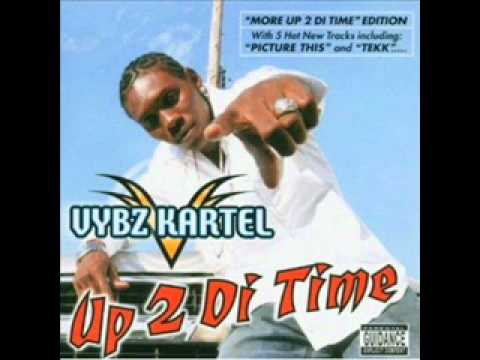
• Pussy Jaw (Mad Ants riddim, 2003): Vybz Kartel reels off his raw rhymes at top speed on Pussy Jaw, a pure slackness song whose lyrics we wouldn't dare reproduce.
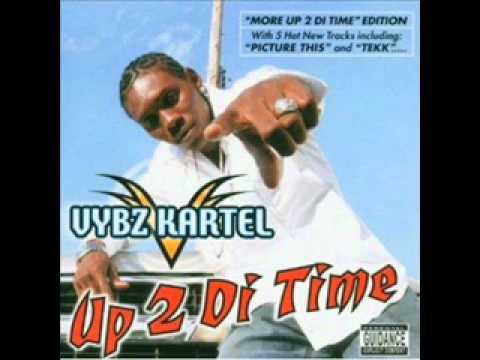
• Picture This (Blackout riddim, 2004): The Blackout riddim gave Kartel two tracks on his favourite subjects: women (Picture This) and guns (Real Deal).

• Faggot Correction (Stepz riddim, 2004): Behind this homophobic title is in fact a diatribe against Spragga Benz, who had the misfortune of lending a hand to Assassin (one of his Red Square crew artists) in his clash against Kartel. A textbook example of the genre.

• Emergency (Siren riddim - 2005): On the hypnotic riddim produced by Patrick “Roach” Samuels, Kartel sweeps aside the false political rivalry of the two-party system (“Two party, but ah de same sad song dem a play”) and calls on politicians over the emergency situation in the ghettos.

• We A Kill We (2006): An unreleased track recorded for the documentary “Made In Jamaica”, directed by Jérôme Laperrousaz, We A Kill We is unambiguous. “We're killing each other, it's not the others, I've never seen a gun fire by itself” before pointing the finger at politicians: “They create the slums and import the guns. Money and drugs are the parents of crime”.
• Broad Day Light (Daybreak riddim, 2008): In the middle of the Gaza / Alliance clash, Mavado and Vybz Kartel both let rip on Stephen McGregor's riddim. Kartel boasts of “killing people in broad daylight”. And then there is this line: “Dem charge mi fi murder / Mi go through di court door glad.”

• Million by a morning (2008): “Badness stop work / Money up to di time like clockwork”: crime no longer pays for Vybz Kartel, who sends his guns back to Smith & Wesson and concentrates on business.

• Trailer load a money (2008): On a Chimney Records riddim, the title references Shabba Ranks' hit (Trailer load a girls), twisted into a fresh celebration of money: “Mi no born rich / But mi nah dead poor (…) Get rich or die tryin.”

• Life Sweet (2008): Life is smiling on Vybz Kartel. An echo of the earlier songs that see him celebrate his money, Life Sweet is something of a song of fulfilment. Kartel has nothing left to prove.
• Mr. Broadcast Commission (My Music), 2009: When the Broadcast Commission (the equivalent of France's CSA) drew up a list of songs banned from the airwaves, Kartel defended his music and hit back by pillorying the JBC, without uttering a single insult.

• Mr Officer (Triple Bounce riddim, 2009): While the dancehall around him was pretty poor in 2009, Kartel lays down a brilliant piece of social criticism over a ganja tune backdrop.

• Me Talk With Gunshot (Collie Monster riddim, 2009): On this fearsome riddim produced by the Dane Pharfar, Kartel, at war with Mavado, boasts of letting his guns do the talking before he does. It's fun to spot an almost prophetic line: “Threaten my life I'll kill you without regret / Before I'm buried, I'll go to prison for 30 years.” Wrong: it's 35.

• The Lyricist (2011): Just when he seemed to have lost himself in his trip as a singer of autotuned melodies, Vybz Kartel opportunely reminds us that he remains THE lyricist of the Jamaican scene.

“It's the new millennium / Something new is about to happen / Marshall and Kartel are going to generate a storm.” Ego trip? Megalomania? On this combination with Wayne Marshall, New Millenium, Vybz Kartel is sure of his strength: at the dawn of a new millennium, nothing can stand in his way. New Millenium is something of a statement of faith, the signature track of an apprentice star who fully intends to leave his mark on the new millennium. And the Mad Ants riddim gives him his first big hit. Vybz Kartel's launch into orbit is inseparable from that of a young producer, Donovan Bennett, who was not yet called Don Corleon: “The first time I met Vybz Kartel, it was for dubs. I then put him on the Mad Ants riddim, on his own at first. He was doing the chorus and I said to him: 'No, we're going to get Wayne Marshall to sing'. I erased his part and that's what we did.” The result was New Millenium with Wayne Marshall in 2003.
The previous year, the Stone Love sound system had even awarded him the honorary title of deejay of the year 2002. Unlike the many wannabe artists Jamaica churns out every year, Kartel was already 26 when he received this first distinction. By that age, he had been through the usual lot of any aspiring deejay. Vybz Kartel grew up in Portmore, separated from Kingston by the harbour and the immense docks. Lt. Stitchie, Ninjaman, Papa San, Will Smith and KRS-One are the influences he confesses to, forging his hybrid style, heavily influenced by hip-hop. In 1993, he recorded his first single (Love Fat Woman, for Alvin Reid) under the name Adi Banton, in reference to Buju Banton. In 1996, he formed the trio “Vybez kartel” with Mr. Lee and Escobar, then kept the name (slightly modified) when the group split up. In 1998, he made his mark on the stage of Champions in Action (an event organised by Christopher “Dudus” Coke, the godfather of West Kingston – a name that will come up again) and was spotted the same year by Bounty Killer. He joined his crew, the Alliance, and served his apprenticeship writing songs for the Warlord (High Grade Forever, Warlord Rule The World, Gal Clown and the Scare Dem Crew: take-off was imminent.
“We were crazy and young, real hotheads”
New Millenium is also the starting point of a long joint adventure with Donovan Bennett. It was he, in fact, who christened him, in the intro to Mad Ants: “Yo, Don Corleon, the girls dem feeling for you only.”. Bennett challenged him: “Hey, what's this Don Corleon?” Kartel's answer: “But it's you! You're our Marlon Brando!” Their fruitful collaboration continued with Why Yuh Doing It (Krazy riddim), again with Marshall, then with Sweet To The Belly on the Egyptian riddim (Blaxx Music). “Back then, we were crazy and young, real hotheads, recalls Don Corleon. For example, when I composed the Egyptian riddim, I was in my studio at 11 at night programming the rhythm and I had the idea of putting Indian tablas in it. A friend had given me a CD with tablas on it. I built the rhythm, I played the bass. And I found this girl's voice on the CD, I sampled it and re-sampled it. Kartel started laughing, he had the lyrics for Sweet to the Belly, it was deadly!” From then on, nothing would stop Adidja Azim Palmer.
Vybz Kartel's talent did not escape his peers. Wayne Marshall remembers being lastingly impressed by the deejay's potential: “When we met Kartel, we saw him as an immense hope for the future. His wordplay and his work ethic were admirable.” Everyone who rubbed shoulders with him stresses his obvious talent. A few years later, in 2010, the American producer Dre Skull (Mixpak Records) travelled to Jamaica to record Vybz Kartel, who did not miss a single match of the football World Cup, then in full swing. Dre Skull says on his blog that he had never seen an artist record like him: “Within ten minutes, he had worked out complete phrases and the melody. He cared neither about the order of the phrases nor about that of the melody fragments: he could do the fourth bar of the chorus before going back to the first three. Things like that. The song took shape quickly. As well as writing the lyrics and the melody, he also heard the mix of the song in his head, and he gave Notnice instructions to double this or that word. In an hour and a half, the song was finished.”
“A virtuosity on the level of Robert Johnson”
During the recording, Dre Skull noticed that Vybz Kartel was able to repeat a phrase on a second or third take exactly the same way as the first: “It was incredible to watch: if he made a mistake on a word, he would go back and re-record the previous phrase. On the computer, the waveform of this new take was exactly the same as the previous one – the shape of the words, the volume, everything exactly identical. I knew Kartel was a master of his craft, but this is a virtuosity on the level of Robert Johnson.” For another track, the instrumental was built for twelve-bar verses: “He started by recording the twelfth one first. He listened to it, then went back and recorded the eleventh bar, then the tenth… He literally wrote and recorded each bar in reverse order to build the verse.”
Kartel closed 2003 with the release of his first album, “Up 2 Di Time” (like the catchphrase he constantly drops), on Greensleeves. Innovative riddims, devastating humour, finely chiselled rhymes, acrobatic wordplay, brilliant metaphors and staggering technique: Kartel ushered dancehall into a new era.
In December, at Sting, his clash with Ninjaman turned into a brawl. When it was announced shortly afterwards that Bounty Killer would not be taking the stage, chaos broke out. Stones and bottles thrown, gunshots, injuries and arrests… The next day, the Gleaner ran the headline: “Terror at Sting”. Vybz Kartel apologised to Ninjaman and the Sting promoters, all under the eye of the mainstream media. All of Jamaica now knew the name of Vybz Kartel.
His rise continued at the speed of his wordplay and polysyllabic (de)constructions. He was on every riddim, at every show and worked with every producer: Donovan “Vendetta” Bennett (Don Corleon), Cordel “Scatta” Burrell, Arif Cooper, Christopher Birch, Patrick “Roach” Samuels… He was also on every subject: gun tunes (Real Deal), ganja tunes (Full Up Of Grass, High Vibe) and sex tunes (Pussy Jaw, No See Nothing, Proper English, Picture This), the usual triptych. Kartel also proved a scathing political commentator (Politics, Mr Politician). On Emergency, he puts a few thorny questions to “Bruce” (Golding) and “Mr. PJ” (Patterson): “Mr. Bruce, Mr. PJ / This is just a couple question from Addi the deejay / [Question:] Kingston mek no AK? / [Question:] How gun come inna JA? / Who own the wharf and the airport, the docks and the bay? ”
Everything passes under the fire of his irony, including the most varied subjects such as mobile phones (Hello Moto), and even Beyonce's hip movement (Beyonce Wine). There is one last subject Vybz Kartel holds especially dear: diss tunes, attacks on Ninjaman, Assassin, Spragga Benz, and soon Bounty Killer and Mavado, and the whole Alliance along with them (Aidonia, Busy Signal and even Bling Dawg, who was nonetheless very close). He can write about anything, but he still has his preferences: sex and guns. As his fame grew, his lyrics began to attract attention. Between the explicit and gratuitously filthy rhymes, the glorification of violence and the avowed homophobia, Vybz Kartel racked up grievances. In the running for the 2004 MOBO Awards (Music of Black Origin Awards) in England, he and Elephant Man were eventually removed from the list of contenders for best reggae act following lobbying by the LGBT association OutRage!, which denounced their homophobic lyrics (it was ultimately Sean Paul who took the trophy). It was around this time that his US visa was withdrawn, and he would never get it back.
PART 2: START WAR AND DEAD (2006-2008)
For having sung with D'Angel, Bounty Killer's ex-girlfriend who was then engaged to Beenie Man, his sworn enemy, Vybz Kartel incurred the wrath of the Warlord. There cannot be two bulls in one arena: Kartel left the Alliance (followed by Aidonia, who would record the song Adid A Mi Daddy Who Wa Vex Wan Vex) and founded his own group: the Portmore Empire. The deejay Deva Bratt would later claim that he was the original founder of the Portmore Empire but that Vybz Kartel had officially registered the name without his knowledge.
Now dismantled, the Portmore Empire then brought together Popcaan, Gaza Slim, Shawn Storm (also sentenced to life), Sheba, Lisa Hype, Gaza Kim, Black Ryno and Jah Vinci (who would leave the crew), and later Tommy Lee. Vybz Kartel was the leader and mentor of all these budding artists. “I learned almost everything from Vybz Kartel, Popcaan told us in 2012. He's a guy who really takes music seriously, who works very seriously, both to perform on stage and to record a song.” Aidonia, who has since founded his own group, also remembers what he owes to Kartel: “He was the first to encourage me, to tell me to persevere with my style without changing anything and that one day I would find success too. When he came back from touring abroad and saw me struggling, he always gave me a bit of money. He started calling me up on his shows, urging certain producers to record me, certain selectas to play my tunes at parties… He introduced me to Bounty, telling him I had a crazy flow, we started to be all together…”
Pushing the provocation, Vybz Kartel turned up at D'Angel and Beenie Man's wedding (there was even talk of him joining the Doctor on his Mafia House label). This is where his opposition to Mavado, a recruit of the Alliance, took root. For months, the Gully God and Addi The Teacha (his new nickname, to get around his three-album contract with the Greensleeves label, which had just released “JMT”) attacked each other with ever more insulting singles. Behind the Kartel / Mavado clash was the opposition of Gaza (the name Kartel gave to his Portmore neighbourhood) against Gully (a ghetto within the ghetto of Cassava Piece, where Mavado comes from). Over the months, this rivalry spilled into the streets and school playgrounds, spread to the neighbouring islands and took a worrying turn when shootings broke out between the two camps. Both artists were regularly named by the police as “persons of interest”.
In March 2007, they gave a press conference at the government's initiative. Under the eye of the Deputy Commissioner of Police, they showed their unity, called for a ceasefire and apologised to their fans. It must be said that the climate was heavy in Jamaica that year: 2007 would total 1,574 murders. Their rivalry intensified all the more in 2008, notably on the Self Defense riddim by Cordell “Skatta” Burrell (Kings of Kings) and the Silent river riddim by Shane Brown (Jukeboxx). Everyone was called upon to pick a side, even public figures: Usain Bolt publicly declared his allegiance to Gaza “till the end”. Renato Adams, a retired super cop (he was a Senior Superintendent of Police), put forward another reason for the flare-up, which he said stemmed from the long political rivalry born of Jamaica's two-party system: Gaza was said to be mostly PNP, and Gully JLP. The year 2008 was the peak of their confrontation, up to their face-to-face at Sting, where a clash was scheduled.
On a packed stage, Vybz Kartel appeared in a full soldier's outfit, with the obligatory camouflage and helmet. Opposite him, Mavado left the stage prematurely, after a short clash in which sexuality and mothers supplied the material for the main punchlines. What matters is not so much victory as being the first to claim it: the very next day, Vybz Kartel recorded two singles mocking his rival's flight: Last Man Standing then Don't Run, in which he nicknames Mavado “Cassava Powell”, in reference to Cassava Piece, the ghetto he comes from, and to Asafa Powell, the Jamaican sprinter.
“It's only music – it's art”
It would take another year before the official reconciliation… under the patronage of Christopher “Dudus” Coke, the son of Jim Brown and baron of Tivoli Gardens, whose arrest in 2010 would cause dozens of deaths after the army moved into Kingston. The two artists performed at the godfather's show, the West Kingston Jamboree, and appeared all smiles, arm in arm.
The next day, on 8 December 2009, they even met Prime Minister Bruce Golding (JLP) to officially put an end to hostilities. “Perhaps it was blown a bit out of proportion by the media, Kartel said afterwards. But as they say, with great power comes great responsibility. Mavado and I thought it was the best thing to do, to show impressionable young minds that it's only music – it's art.” For three years, their rivalry had played out in the microcosm of Kingston. But since then, Vybz Kartel had taken on an international dimension and his notoriety extended well beyond the borders of Jamaica.
PART 3: MONEY OVER WAR (2009-2011)
At the end of 2008 came the hit Ramping Shop with Spice, on the instrumental of Ne-Yo's Miss Independent, which he used without EMI's authorisation (the track was eventually replayed by Notnice). Jamaica thought it had heard everything with Yellowman, Shabba Ranks, Lady Saw and company. It discovered that you could go even further in slackness lyrics. Scandal erupted, the song was banned by the Jamaica Broadcast Commission (JBC), which only increased its spread. When polite society expressed its outrage in the pages of the Gleaner, Vybz Kartel took up his pen: “When I did Money Fi Spend, it went to number one in the charts, and nobody approved me. When I did Emergency, nobody approved me. But when the same public that loves these 'reality songs' also loves Rampin Shop for what it is – music, it's a problem for you, the Scribes and Pharisees of our time.”
Another success was his trilogy on Clarks shoes (Clarks, Clarks Again, Wear Weh Yuh Have). Declarations of love to the Jamaicans' favourite shoe brand, they caused a rise in demand for the venerable English shoemaker. Enough to give him ideas: “Seeing what I am capable of when it comes to branding and products, I decided to take advantage of my knack for setting trends.” That is how he launched his own shoe brand, the Addis trainers. He had already launched his booking company Timeless in 2005, to better control his career. But Vybz Kartel thought big and dreamed of being Jay-Z, whose business sense he admired. With his partner Corey Todd, he launched a rum brand, Street Vybz. Here too, war raged: when they split up, Corey Todd promptly set up a new spirits brand, Yaad Swag, with Beenie Man as its emblem. There were also the Daggering condoms, whose advert is hilarious), the parties he organised at the Building, his Vybz Wear clothing line (T-shirts and belt buckles)… and, of course, his Cake Soap and his line of skin-lightening cosmetics.
Bleaching was Kartel's new craze at the end of 2010. Having mocked it, he became its most high-profile advocate. Appearing with a lighter complexion, which showed off his tattoos, he also sang its praises (Straight Jeans and Fitted, Coloring Book, Cake Soap) and caused a real outcry in Jamaica. Many artists denounced what they saw as self-hatred (Mr Vegas, Kiprich, Assassin, Busy Signal, Perfect…). As usual, Kartel knew that the best defence is attack and hit back: “When black women stop straightening their hair, wearing wigs, when white women stop getting injections and implants, when bald men stop getting hair transplants, and when people stop having their noses redone or using plastic surgery, then I will stop using my 'Cake Soap' and we will all live naturally. Until then, go f… yourselves.” In March 2011, invited to give a lecture at the University of the West Indies, he found other words: “I maintain that bleaching doesn't mean the same thing today as it did 25 years ago. We are a prouder race, which knows it can do what it wants with its style.”
J$10 million a month
All this income was on top of his earnings as an artist. At the time of his arrest in 2011, the Jamaican media estimated that he was earning J$10 million a month (about 67,000 euros). End of the war, start of business: several Kartel songs sum up the strategy well: Money Fi Spend. Considering that his blood was “too rich to spill ”, he declared an end to hostilities: “I'm not a warmonger / I want two cars, two houses with a pool and a bar”. One can also cite Million Dollar By A Morning, in which he wants a refund for his guns, which he sends back to Smith & Wesson, and Money Over War, on Arif Cooper's Revolution riddim. “Make money, not war” is precisely the credo of Christopher “Dudus” Coke. Another allusion to his mafia ties? In an article published after his conviction, the Sunday Observer claimed that Vybz Kartel belonged to the Klansman gang of Spanish Town.
Paradox: just as he reached worldwide fame, he was confined to his own country, or nearly so. While he shared duets or remixes with Jay-Z, Rihanna, Missy Elliott, Busta Rhymes, Akon, Lil Wayne and Eminem, his lyrics, condemned for their homophobia, violence or crudeness, barred him from airports. First came the Caribbean: Grenada, Barbados and St Lucia banned the deejay one after another. When Guyana banned him from the airwaves, he answered defiantly: “I don't care about them and their ban, because I would never go to Guyana”. Before driving the point home: “I'd go to Iraq before I'd go to Guyana.” Even so, the barriers were closing little by little. He could no longer go to the United States since they had deprived him of his visa, and in Europe, the visa was also cited to justify the cancellation of his tour at the end of 2009. The following year, he managed to set foot on the continent, having finally signed the Reggae Compassionate Act in September 2010 after three years of refusal (he had already performed, while ill, in Paris in 2009 with Aidonia).
Asked about his lyrics and their influence on young people, Vybz Kartel sent the authorities back to their own responsibilities: “In a third-world culture like Jamaica's, crime and violence are endemic because of the lack of social infrastructure for ghetto youth, he explained in an interview with Rolling Stone magazine in early 2011. Corruption exists at every level of society, from political corruption to corruption within the police force and the private sector as a whole, and all this has led to the decline of society. And society wants to incriminate artists and make scapegoats of them?” And he went on: “I live in Norbrook (an affluent Kingston neighbourhood, editor's note). The kids there listen to the same Vybz Kartel songs as the kids in the ghetto. So why don't the youths of Norbrook behave like the youths of Tivoli or Jungle? It comes down to upbringing in life in society. And it starts with the family, which is why I always say: 'Family first!' My children listen to my songs and I don't see them going bad. It's the fault of society, of post-colonialism, of politicians, but people want to pin it on artists. I refuse that.”
Kartel multiplied opportunities to get people talking about him. He owned it and claimed it: “From Kartel, expect the unexpected.” Can't go to the USA? Booked at the Best of the Best festival in Miami in 2011, he gave a concert… by satellite. The tattoos, the bleaching? He added dental braces, the locks... The establishment would like to see him stay confined to the ghettos? He gave a lecture on his life at the Mona campus of the University of the West Indies, invited by Dr Carolyn Cooper. Condemned for his violent songs? He retorted that he would no longer make gun songs.
“I had to fool Babylon”
But when Corey Todd, who had ended their joint investments, told the media that he no longer recognised his ex-partner and feared for his life, he fired off a new (long) statement to explain that all his antics were merely parts of a double game designed to “fool Babylon and mask his true intentions: “Two years ago, I had an epiphany on stage. I saw thousands of people shouting Kartel's name, jumping, and listening to every word I said. (…) I realised that people weren't eating out of my hand but that they wanted to hear Kartel speak, because at last someone was telling them their story in a deep and unrestrained way. Whether I talk about sexuality, poverty, police brutality, injustice or the trials and tribulations of the ghetto, I was ultimately giving a voice to the people of the ghetto, a strong voice such as society had never heard.”
Invoking the figures of Marcus Garvey, Sam Sharpe, Paul Bogle, Bob Marley, Peter Tosh and Jacob Miller, whose fate he did not want to “share”, he justified his conduct over the past years: “(…) I made the decision that was incumbent on me, I had to fool Babylon. I realised that if I kept doing outrageous and strange things, they would only see me as an attention-seeking artist, without realising that since 26 July 2009, quietly, I have written a book and set up my GEL programme (Gaza Education and Literature). (…) Let's see society's hypocrisy for what it is. Now that my book is about to come out, now that most of my songs will take on a more cultural connotation (since I've decided to stop singing gun lyrics), now that I'm going to offer educational opportunities to the youngest, will you give me as much attention?”
So it was to fool Babylon once again that he launched his reality TV show, “Teacha's Pet”, on the Jamaican channel CVM. A sort of “Bachelor”, in which 20 women gathered in a house in Kingston compete for his favours. The licentious programme drew the wrath of its sponsor, Lime, which pulled out, but it continued even after Vybz Kartel's arrest. All summer long, the deejay was the centre of attention. His hit Summertime gave him the chance to poke fun at those who rushed into the gap after him with summer songs, while the release of the album “Kingston Story”, produced by Dre Skull (Mixpak Records), got him into the pages of Rolling Stone and the New York Times. A month later, he was never out of the court pages.
PART 4: COURT SESSION (2011-2014)
On 29 September 2011, Vybz Kartel was arrested by the police for possession of marijuana and a firearm. A first murder charge was added, then a second, as well as a charge of perverting the course of justice. Detention was nothing new to him: his career was dotted with numerous arrests and spells in custody. Arrested after the brawl with Ninjaman on the Sting stage in 2003, he had been held in custody as part of a police investigation into two murders. In 2004, he was detained for four days, accused of illegal possession of firearms. In February 2008, during Operation Kingfish, the police questioned him about a photo in which he and Aidonia show off firearms. In July 2010, while Kingston was counting its victims from the assault on Tivoli Gardens to arrest Dudus, he spent two weeks behind bars as part of a gang investigation. He was released a few days before Sumfest, where he performed dressed as a convict, handcuffs on his wrists.
To defend himself against this double murder charge, Kartel called in leading lawyers: the Tavares-Finsons, father and son. Christian Tavares-Finson is none other than the son of Christopher “Dudus” Coke's former lawyer, Tom Tavares-Finson (also a JLP senator), and also the half-brother of… Damian Marley. Bail applications were rejected one after another, and the various trials dragged on. With one postponement after another, Kartel spent two and a half years behind bars before his final trial opened. But even from the depths of his cell, he kept stirring up the media world.
The bars did not stop him from lambasting the police's conduct, accusing them of lies, threats and fabricating evidence: “Everything to do with my case is a fabrication, everything is fabricated. I don't know who owned the corn I may have stepped on in the past, but now it's coming back to haunt me.”
The deejay firmly maintained his innocence. In an interview with Boomshots, he cast himself as a victim: “Jamaica's unjust system ('injustice system') is trying to use me as a scapegoat.” His cell was searched after the murder of the producer Roach, his former manager, the police suspecting him of being involved.
“Dancehall is in prison”
The phrase “Free World Boss” (his new nickname) blossomed everywhere, even on a Drake T-shirt, Drake having voiced his support in an interview. His singles kept raining down: earlier recordings, unreleased and put on sale by opportunistic producers: “When Kartel visits you, he can record five songs for you in a day”, explains the producer Tarik “Rvssian” Johnston. In September 2013, School was a final two-fingered gesture: he advised young people to give up skinny jeans, not to bleach their skin and to go to school.
From his cell, he dismantled the Portmore Empire, setting Popcaan and Tommy Lee free; in the meantime they had taken over the media spotlight and drifted away from their former mentor. He also shot a few arrows: “Dancehall is in prison. If I die tomorrow, dancehall will endure, but the next artist who will bring energy, panache and vibe to dancehall has not arrived yet. Since I've been in prison, reggae has taken the upper hand again, because it is a refreshing alternative for young people who realise that dancehall artists are just recycling my lyrics and my flow. It's pathetic.”
His book, “Voice of the Jamaican Ghetto”, which was due out on 23 July 2011 – Haile Selassie's birthday – finally came out while he was behind bars. The cover montage presents him in the guise of Malcolm X and each chapter bears the name of one of his “conscious” songs. “It's a social commentary on ghetto life, seen through the eyes of Vybz Kartel. Believe me, it's going to be very detrimental to Vybz Kartel's freedom because it's a book without taboos, which tackles taboo subjects like political corruption, abortion, extrajudicial executions, how religion is used to keep ghetto youth in mental slavery.”
On 14 March 2014, he was found guilty, and on 3 April he was sentenced to life imprisonment (with a minimum of 35 years). However much Kartel wanted to appeal the conviction and the sentence, Jamaica had got rid of its bogeyman for a while, amid the heavy silence of artists. The same day saw the announcement of the release of the single PG 13 Gimme Di Money by Little Vybz and Little Addi, two of Vybz Kartel's sons (Jaheim and Raheim), produced by Short Boss Musik, the recent label of their mother, Tanesha “Shorty” Johnson. The heirs will have their work cut out piecing together the fallen Empire.
VYBZ KARTEL, THE PLAYLIST
Because Vybz Kartel is not only Clarks, Summertime, Go Go Wine and Ramping Shop, here is the editorial team's playlist:
• New Millenium feat. Wayne Marshall (Mad Ants riddim, 2002): It all starts here. In 2002, Vybz Kartel made his intentions clear: the new millennium would be his, and his duets with Wayne Marshall propelled him to the forefront of the dancehall scene. First New Millenium then Why We Doing It on the Krazy riddim (again for Don Corleon) in 2003. The two combinations are brought together in one video.
• High Vibe (Caddy Ride riddim, 2003): “Sen sen sen sen sen on, sen on and never hang on”: the chorus became such an anthem that he made a new song out of it, Sen On, on the Time Travel riddim produced by Steve “Lenky” Mardsen.
• Badman Party (2003): An “unreleased” song from the album “Up 2 Di Time”, Badman Party illustrates the rapport with Don Corleon, his favourite producer at the time. He made a sequel, Badman Party 2, on his second album, “JMT”.
• Pussy Jaw (Mad Ants riddim, 2003): Vybz Kartel reels off his raw rhymes at top speed on Pussy Jaw, a pure slackness song whose lyrics we wouldn't dare reproduce.
• Picture This (Blackout riddim, 2004): The Blackout riddim gave Kartel two tracks on his favourite subjects: women (Picture This) and guns (Real Deal).
• Faggot Correction (Stepz riddim, 2004): Behind this homophobic title is in fact a diatribe against Spragga Benz, who had the misfortune of lending a hand to Assassin (one of his Red Square crew artists) in his clash against Kartel. A textbook example of the genre.
• Emergency (Siren riddim - 2005): On the hypnotic riddim produced by Patrick “Roach” Samuels, Kartel sweeps aside the false political rivalry of the two-party system (“Two party, but ah de same sad song dem a play”) and calls on politicians over the emergency situation in the ghettos.
• We A Kill We (2006): An unreleased track recorded for the documentary “Made In Jamaica”, directed by Jérôme Laperrousaz, We A Kill We is unambiguous. “We're killing each other, it's not the others, I've never seen a gun fire by itself” before pointing the finger at politicians: “They create the slums and import the guns. Money and drugs are the parents of crime”.
• Broad Day Light (Daybreak riddim, 2008): In the middle of the Gaza / Alliance clash, Mavado and Vybz Kartel both let rip on Stephen McGregor's riddim. Kartel boasts of “killing people in broad daylight”. And then there is this line: “Dem charge mi fi murder / Mi go through di court door glad.”
• Million by a morning (2008): “Badness stop work / Money up to di time like clockwork”: crime no longer pays for Vybz Kartel, who sends his guns back to Smith & Wesson and concentrates on business.
• Trailer load a money (2008): On a Chimney Records riddim, the title references Shabba Ranks' hit (Trailer load a girls), twisted into a fresh celebration of money: “Mi no born rich / But mi nah dead poor (…) Get rich or die tryin.”
• Life Sweet (2008): Life is smiling on Vybz Kartel. An echo of the earlier songs that see him celebrate his money, Life Sweet is something of a song of fulfilment. Kartel has nothing left to prove.
• Mr. Broadcast Commission (My Music), 2009: When the Broadcast Commission (the equivalent of France's CSA) drew up a list of songs banned from the airwaves, Kartel defended his music and hit back by pillorying the JBC, without uttering a single insult.
• Mr Officer (Triple Bounce riddim, 2009): While the dancehall around him was pretty poor in 2009, Kartel lays down a brilliant piece of social criticism over a ganja tune backdrop.
• Me Talk With Gunshot (Collie Monster riddim, 2009): On this fearsome riddim produced by the Dane Pharfar, Kartel, at war with Mavado, boasts of letting his guns do the talking before he does. It's fun to spot an almost prophetic line: “Threaten my life I'll kill you without regret / Before I'm buried, I'll go to prison for 30 years.” Wrong: it's 35.
• The Lyricist (2011): Just when he seemed to have lost himself in his trip as a singer of autotuned melodies, Vybz Kartel opportunely reminds us that he remains THE lyricist of the Jamaican scene.
Report written by la rédaction
Comments (18)
benjy · · rating: 4 out of 5
Saouty · · rating: 5 out of 5
THEA · · rating: 5 out of 5
GWELL · · rating: 5 out of 5
Flash · · rating: 5 out of 5
lab · · rating: 4 out of 5
rasta · · rating: 4 out of 5
baddaz · · rating: 5 out of 5
Yep · · rating: 5 out of 5
weckels · · rating: 4 out of 5
Desmond · · rating: 5 out of 5
KLM · · rating: 5 out of 5
DB · · rating: 5 out of 5
Miguel · · rating: 5 out of 5
On a perdu, un magnifique Artiste...à moins que ce ne soit lui, qui s'est égaré...
"Jah guide I comin' in, Protect I goin' out!
Jihel · · rating: 5 out of 5
Lydia · · rating: 5 out of 5
La prison lui mettra surement du plomb dans la tête à défaut d'en répandre autours de lui...
free world boss · · rating: 5 out of 5
FreeKartel · · rating: 5 out of 5