INTERVIEW : TANYA STEPHENS
Interview by : Alexandre Tonus
Pictures by : Martei Korley
on Wednesday, June 28th 2006 - 19 227 views
Since "Gangsta Blues" in 2004, she has reigned supreme over female dancehall. She has even cast the Lady Saw phenomenon, the slackness muse of the 90s, into the shade. The time is no longer for explicit and crude lyrics, but for matured and considered words. A conversation with the diva of dancehall.
 Reggaefrance / You’re about to release a new album for VP called “Rebelution”; can you give us more details about the project?
Tanya Stephens / The album will be released on 29 August on VP Records. There are 20 tracks on it, including a poem, the intro, which is a sort of starting note, and two interludes. So there are 16 full songs. It’s a bit in the continuity of the kind of atmosphere you could find on “Gangsta Blues”. It’s not what you could call a dancehall album, one that only contains songs for dancing, that is made only for dancing and partying and sticks to the usual dancehall themes. This album goes further than that. It prompts discussion of many problems that it reveals, that it unmasks in a way when I talk about basic things. I feel it’s a very good forum. People listen to me and they expect me to say something that will, at the very least, start a discussion. And I feel obliged to do that. I’ve tackled certain subjects that, if you knew me, if we were friends, we’d be discussing between ourselves anyway. Because I spend all my time trying to solve my problems, those of my community and those of the people around me. I’ve tackled new subjects. I talk about racism, sexual assault, all those things that are hard for anyone to talk about. But it’s a choice not to sit still and to talk about them in several ways. By approaching these problems from different angles, on the album, I hope I can shed some light on our situation.
Who are the producers and musicians you worked with on this album?
The majority of the songs are on Tarantula Records, the label I run with my partner Andre. He wrote most of the music. I also did some songs with other producers, like Free Willy, Barry O’Hare and a newcomer called Biggy. I’m no longer sure of the name of his label, but I worked with Biggy, he’s on Irie FM. If I’m forgetting anyone, I’m really sorry, I don’t have a copy of the album in front of me to tell you. Emil Gotthard, someone I met when I was living in Sweden and with whom I worked when I signed with Warner; I still work with him. He’s a really good musician and I love his style. I respect him a lot and I try to involve him in everything I do; and he worked on the album too. He composed the first single, These streets. I think I’ve covered everyone who worked on the album.
These streets is already a big hit in the United States. How was the song received in Jamaica?
We haven’t done any promotion of this song in Jamaica yet. We’ve only sent it to a few people. But according to them, the reception has been good pretty much everywhere. We only released it on 45 last week. Reggae shows its love; the song is played by those who have it, it’s played a lot, and I’m getting plenty of feedback from people in the street. So it seems the song is in a good position.
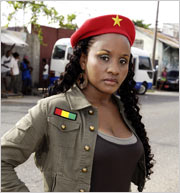 Can you tell us more about the meaning of These streets?
It’s a song that takes the point of view of a woman who lives with a dealer. I know it’s something typical of people; when they talk about drugs, the easiest thing to do is to say you shouldn’t touch them. That commandment is always cited and watered down. But I don’t believe in that, I’m talking about real life. They will carry on doing what they do, whether I tell them not to do it or not. But we have to stay practical. There will be repercussions depending on how we’ve prepared to deal with them. One of them is that usually the people who sell these drugs are in the street all the time, their women stay at home looking after the house and the children and almost never see them. But when trouble comes, the only people they can count on are those women. My opinion is that they really shouldn’t wait for trouble to appear before starting to spend time with them, because they’ll have no choice, they’ll have to give them time and show them respect once they are worn out by their troubles. That’s what the song is about. These streets don’t love you. It’s just a place where you wander. I’m the woman who loves you and you should show me respect for that.
There’s also Who is Tanya; what is the purpose of that song? Who is Tanya?
It’s quite autobiographical. It’s a quick synopsis of what I’d call an autobiography. It’s unfortunate, but in the reggae and dancehall industry, I don’t think women are taken seriously. It’s easy for us to get into this scene, but it’s not easy to be taken seriously. For example, if a man had made What a day, The other cheek, It’s a pity or any of those popular songs on “Gangsta Blues”, if a man had simply made “Gangsta Blues”, he would be seen as a popular hero. Tanya Stephens made this album. In the street, people still really applaud, but in the business, that recognition is granted very reluctantly. I think I’ve earned my right of entry into this industry. Nobody gives me gifts, but I’ve done everything to earn my place. When the last album came out, everyone put on a nonchalant air, saying: “yes, it’s good, but we expected it to be good”. Despite what the business said, people in the street keep buying it and they keep saying it’s very good, that it’s great. But in the industry itself, in Jamaica, they act as if it’s forgotten. This song is proof that I’m aware they are trying not to see what I do. I don’t think it’s a conspiracy, I don’t base my explanation on a conspiracy theory. I don’t feel sad, I’m not feeling sorry for myself, I’m just saying that I know they are trying not to see what I do. It’s significant all the same and I ask that it be respected.
Still a go loose already sounds like a summer hit, thanks to that crossover style. Will there be other songs of that kind on the album?
Indeed there will. I tried to give as much of what I had as I could on this album, because I believe buying an album is an investment. You spend a lot of money buying it and it’s something you become attached to. You could get rid of it, but then you wouldn’t have got your money’s worth. I feel an obligation to earn that money rather than simply taking it without caring what people get in return. I want people to know that every time they see the name Tanya Stephens, they can close their eyes and trust what comes with it, because I will never disrespect that money, that investment. So I try to give my maximum. If it sounds like pop, that’s fine by me. As far as music goes, I come for reggae, I’m a child of reggae and my influences will always be reggae, but I’m a musician, I’m an artist, I’m obliged to give. Whatever album I’m selling, I’m obliged to give so that people get their money’s worth. And that’s what I’m trying to do. Luckily, I succeeded and I had even more ideas than I managed to put on the album.
 Where does this change in your career come from? What made you decide to mix styles and move a little away from basic reggae and dancehall?
I’m simply growing up… Maturity demands that I improve. Everything I do has to be better than the last thing I did. I’m simply growing. I’m maturing, getting older, getting wiser, and I’m just showing everything I’ve learned.
Would you agree that you have developed a sexy dancehall rather than slackness? You still talk about love and sexuality, but with more maturity today.
Yes, I agree with that. I think it’s much more seductive to be suggestive and vivid than to talk nonsense, to be crude and coarse. I’m not embarrassed by sex. In fact, I love it. I think there’s nothing about it to be ashamed of. But I think there are ways of dealing with it that are truly disgusting. There are ways I don’t want to hear it talked about, especially not in public, nor in front of my children, nor in front of anyone’s children. So I believe we have an obligation in that regard. It seems to me it’s better to suggest things. I’m actually thinking about what is entertaining, and I don’t think it’s entertaining to just tell me you’re going to put your member in my receptacle and we’re going to make love. It’s not entertaining, because we can all do it. I don’t need to teach that, because we know it instinctively. Human beings know how to use their bodies. Nobody needs to be told, because it makes sense to them. I don’t think I serve great causes by saying things we already know. If I share certain experiences, it must at least be entertaining or spiritual. It must be words people can listen to, and that’s why with sex, I avoid excessive bluntness. I try to make it a little more vivid, because, as I’ve said before, we already know everything we need to know about sex. All we need regarding sex is entertainment. There’s no lesson to be given on the subject; apart from perhaps saying you should protect yourself. But even that, we already know. If I have to talk about that, I have to find another way of saying it. I have to talk about it the way nobody is used to hearing it talked about.
With the success of “Gangsta Blues”, and especially the hit It’s a pity, you are now on MTV; has that changed anything? Has it had an impact on your career?
The reception of this single and the scale of its commercial success played a very important role in the development of my career. They continue to play a very important role. As for the talent you think you have in this business, if nobody else on the market agrees with you, nobody in this business will agree with you. So the more commercial success you have, the more exposed you are, the better the reception and the better your career develops, of course. Everything in my success helped increase my success again and again. And as for It’s a pity especially, it contributed enormously.
Do you have any plans for duets with pop or hip-hop artists, as other great Jamaican artists have done before?
I'm open to anything that makes sense. I don't have a specific project in mind at the moment. There's no artist I'm looking for or want to team up with, and no artist calling me up to do something together. It really depends a lot on the agents, actually. Right now I have no immediate plan to do that. But I remain open and of course, if someone likes my style and wants to do something, I'll be there. I'm also looking to work again with Lanny, from Germaican Records, who produced It's a pity. We're talking about working together more, because we think the things we do together are good. I'm ready to work with anyone who does something that makes sense, but I certainly won't work with anyone whose commercial success would rest only on what they did with me.
You've definitely become an international artist; what's the next step for you?
I have no limits. Everything I can imagine, I come to believe I'm capable of doing. I'm going to make more music. I'm undoubtedly going to try to outdo the last thing I did. This album is already finished. We're ready to serve it up to the public now. The only thing left to do is to present it to people and tell them that if they want to buy it, they can. From there, my personal duty is to improve myself through this album. I also have to get out there and present it to people in person. I really love going out to meet people. Beyond that, for anything else that comes along in the name of entertainment, I'm game. I've also committed to a literary career, with the aim of getting my poems known. Because I write poems, and I write short stories too. So I'm looking to do that as well. I'd put my education on hold for a while, because it's really hard to stop school, really very hard. But I still have progress to make, I have to go back to school and do what I feel I owe to myself. It rounds out the foundations of my education. In short, I have more things to do than I have time to do them.
Speaking of poetry, I read that you took part in the Calabash literary festival; can you tell us about that experience? I understand you got to meet poets from all over the world and share your knowledge and talents with them.
It was a really refreshing experience for me, something different. I'm used to being introduced for my music; so talking to people was something completely different. I just quietly shared a few thoughts and I loved it. I met some really very interesting people. Socially, it was very different from the music world, where there's so much that's superficial. I think I really enjoyed it. It was genuine. There were plenty of people looking for what I'm looking for and most of the poets I met were honing their craft by exchanging with one another. It was more spiritual and I really like that. It all happens in a very good spirit and I invite every creative person to try it. Everybody should try it, it's really good. May everyone who can go to the Calabash festival next year go there. I don't work for them and I gain nothing from advertising them. I just want to tell people that it was magnificent, that I loved it and that it was really refreshing. And I invite everyone to go.
When we last met, you told us you didn't want to be a role model for people, but your place today in the Jamaican music industry and your status as a poet force you to be one in a certain sense, don't they?
Whatever you are or whatever you do, there will always be someone, somewhere, to follow you, but I prefer not to name myself as someone to be followed. I'm only a human being, like all the human beings who follow me. So, every time I make a mistake and someone is following me, I don't want them to make my mistakes. Whatever I learn, I share with them and whatever they learn, they share with me, and that way each of us can learn from the other. There is no one person to guide everybody forever. I have a daughter and I want to be a good role model for her. I tell her: "Your mother is very human, she made a bunch of mistakes". I don't want her to make the same mistakes as me. She'll grow up making her own mistakes and her experience will grow. I tell everybody: I don't want to be a role model, it would be a burden I don't want on my shoulders.
You're a big influence on the singer Cecile. What's your relationship with her?
That's a hard question... For years, we were really good friends, I can say without lying that she was my best friend, even before I made my breakthrough. Unfortunately, when I got more exposure as an artist, her maturity really took a hit. I can't lie: I'm heartbroken. She was the only friend I had, and suddenly, things started to happen. I thought maybe I had taught her something. But unfortunately not, she believes in this superficial way of life. The music industry is full of superficiality. Almost everything revolves around entertainment, it stinks. When it comes to the media, the lifestyle we build around ourselves, our characters, our careers, none of it is real.
When you let yourself get dragged into that, it's sad. To start believing that the stage world really exists. It's just sad. So we're no longer friends now. But let's not talk about it any more, I wish her the best. Of course I still love her very much. I wish her great success, and I'd like to see her focused again, and become the person she was. Reconnected with her reality, and living up to her potential. She has plenty of it, I know what she's capable of.
How do you see the young generation of female dancehall artists? Are they a threat?
A threat? I don't think anyone is a threat. The only person who could be a threat is me. If I don't live up to my audience's expectations, then I'm a threat to myself. If I don't do what I promised to do. Nobody else can beat Tanya Stephens. If someone comes along and turns out to be better than me, I'll give them all my respect, my love, my support and my blessing. Everybody needs a challenge, and competition can be positive. In fact, I'd love for that to be the case, but today I don't see anyone who can do it.
Jamaica now has a woman at its head, Portia Miller. What do you make of that?
I don't know her well enough to know what she has accomplished in the past, or whether she's out of her depth. I can't judge her. I regret the way she came to power. Because I didn't choose her, she landed in my life. One morning, we learned that she was the one in power, installed by her friends. We had no say (elections are held by indirect suffrage, editor's note). It's truly deplorable. Her party, the People National Party, was in power before I had my daughter, and she's going on 12... They've been in power since 1989, I believe. She has always been one of the strong links in that party and if she achieved nothing before, then I can't say I'll vote for her, because I don't know if she'll do more as party leader. I really don't know. Time will tell...
Will the fact that it's a woman change things in Jamaica? Can a woman make her mark on the Jamaican political scene?
It makes me sad that we're still debating women or men. People should be judged on their merit, their deeds, not their sex. I don't care that it's a woman. If a woman ruins the country, it will be no less serious than if it's a man. I don't care about sex. I just want to know the country is well run. If I have a leak, I need a plumber, no matter whether it's a woman or a man.
Everyone can do everything, except give birth. And I can't wait for even that to become possible, because it's painful and I'd gladly let a man do it instead! I'm not into gender at all...
Are you politically engaged?
Politically? Of course, I always am, because I live in a political environment. I'm not affiliated with any particular party. I'm Jamaican, I always will be, and I'll give my support to whoever has the country's interests at heart. And if I see that what's being done is good for Jamaica, I'll never withdraw my support. I'll back it because I'm Jamaican, I live here with my child, my family, my friends. And I want the best for my country.
|
|


 © 1999-2026


 RSS


