INTERVIEW : TAïRO
Interview by : Smaël Bouaici
Pictures by : DR
on Friday, January 30th 2009 - 19 863 views
Tairo is back! Since his emergence in 1997, the former child prodigy of French reggae has known ups and downs. "The man of the featurings who has no album" finally arrives with his first opus, "Chœurs et Âme", not necessarily where we expected him.
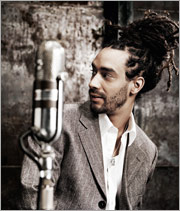 Reggaefrance / Finally, the first album. What happened over the past few years? Why wait so long?
Taïro / Let's say it's my first album for the public. In 2004, I signed with BW, I made an album that never came out. They didn't fulfil their contract, so I parted ways with them. Kilomaitre bought back the tapes, we kept four tracks, we re-recorded eight and there you go. Apart from those four tracks, the other songs are really in the mood of last year: three years of hardship with that label, a complicated and painful love story, a lot of self-questioning, the desire and the need to express all that, to talk about myself…
What frame of mind were you in when you wrote these songs?
For this album I really needed to be in a bubble, not to be fashionable. I needed to make my songs in peace. I didn't feel like doing spectacular things, I just needed to find myself again, to do things a bit simpler, to get back to basics. It's a first album, but you can tell I'm no longer fifteen. I could have made a reggae album right from the start, made this one and then another different one, but it turns out this is the first. Just as Picasso had his blue period, I too have this intimate period. Perhaps a kind of passage into adulthood.
You're doing your promo with the line “The man with the features who has no album”. Do you feel vengeful?
That line lets me step back a little, it's not revenge, it's a private joke for the people who know me.
 "Choeurs et Âme" était important pour exorciser, passer une étape, pour me dévoiler un peu plus. 
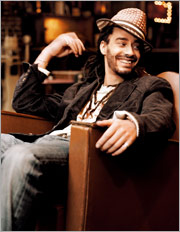 At the start, you felt a lot of pressure, perhaps too much?
I think above all that after Taxi, I wasn't ready to make a solo album, that's mostly it. It's not that I didn't want to, but I was too caught up in searching for myself, too prone to doubt to be able to compose. In that sense, the mixtape helped me a lot, it was the first thing released under my own name, it took the pressure off regarding people's expectations.
Did you end up finding your style?
I don't know. In fact, my style is made up of several styles. On this album, there is more singing, not too much toasting. They are mid-tempo tracks, not too club, they're really songs, we wanted to favour melody and lyrics. It's more of an album to listen to at home.
It feels like you want to distance yourself a bit from dancehall.
Let's say it's more a need to find myself again, to write songs about my feelings of the moment. A track like Jusqu'au bout, which has a slightly pop accent, with hindsight I don't know if I'd do it that way again. But I find it interesting to launch ideas, to try things out. With hindsight, I realise it's interesting to make tracks in the moment, not to let time wear them down too much, otherwise you can let doubt settle in again. Now, I've made a first album, I very much want to make a second. Right now I'm in a reggae auto tune vibe, I want to get back to that, but this record was important to exorcise things, to pass a stage, to reveal myself a bit more.
 The album is more pop than reggae. Do you feel pressure from the reggae scene regarding your compositions? French reggae is sometimes a musical ghetto.
I don't think I owe anything to that scene. I come from reggae, I'm proud of it, it's a great school, a good part of my inspiration comes from there. I'm still amazed by the creativity of new Jamaican releases, I'm still a fan, but the dancehall scene, society in general, isn't about mutual help, I didn't feel I received much support from reggae. I don't lament it, it's an observation.
You got more from hip-hop.
In terms of featurings, clearly. Hip-hop is tighter, there are more rap albums than reggae ones, so more opportunities. I don't want to belong to a clan. I prefer sincere individuals, not necessarily rastas or reggaeboyz, to people who use clichés. I feel that French rappers have managed to make hip-hop culture, and rap in particular, their own. There is a major influence from US rap, that's logical, but all the same, French rap has an identity that we don't yet have in French reggae, especially in the discourse. There are more clichés in reggae than in hip-hop, notably the religious aspect of reggae, which doesn't exist in rap. If you're not rasta and you want to make reggae, you can get pointed at.
That's still a nice irony of history, because originally reggae isn't rasta.
It's funny all the same. Rastafarianism is supposed to be a rebellious way of reclaiming the Bible, but even so, that lobotomy worked anyway. When Rastafarianism entered reggae it was a salvation for Jamaica, the Black King against a white queen and so on. Today, quite a few people cry “Repatriation”, when they wouldn't last two seconds in Africa.
 Why doesn't reggae talk about the housing estates?
The people who come to reggae are often fed up with hip-hop, which, in our generation, is the first culture. It seems cooler to them. People don't have enough confidence in themselves and in their own story to tell it in songs. So they rush into clichés. Beyond that, the major issue is the identity problem, France hasn't managed to handle immigration. You're always asked where you come from. A good image is the one given by Rachid Djaidani, the author of Boumkoeur. The first time you get on the RER with your Arab face, you sit down on a four-seater, you wait, you think people are going to come and sit next to you. In fact you make the whole journey alone. Second trip, same thing. Third trip, you put your feet on the seat opposite. Fourth trip, “Well, the first one who comes and sits opposite, I'm going to…” Afterwards that doesn't mean you should excuse everything, you have to get beyond that. You mustn't fall into reverse racism, hyper-communitarian. That's not the solution.
|
|


 © 1999-2026


 RSS


