INTERVIEW : HéLèNE LEE
Interview by : Sébastien Jobart
Pictures by : DR
on Friday, April 22nd 2011 - 10 327 views
Twelve years after writing it, the journalist and writer Hélène Lee has helped with the film adaptation of "Le Premier Rasta", in cinemas on 27 April 2011. Or how to rehabilitate Leonard Percival Howell, nicknamed the Gong, founder of the rasta movement.
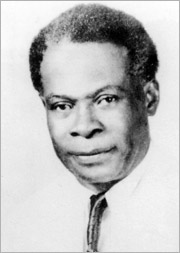
"Le Premier Rasta" traces the exceptional trajectory of the founder of the first rasta community, at Pinnacle. His message was not religious, but social, a matter of identity. Revolutionary. Arrested, committed, imprisoned, Howell bore the wrath of British colonial society. After the destruction of Pinnacle in 1958, he went into hiding and led the life of a recluse until his death in 1981. In the meantime, History erased his name.
 Reggaefrance / "Le Premier Rasta" is the rehabilitation of the memory of Leonard Howell.
Hélène Lee / Absolutely. In his lifetime, he was thrown into prison, sent to a psychiatric hospital, his possessions were burned... Everything he did was systematically destroyed, to the point that the rastas themselves forgot him. When I went to the Pinnacle the first time, I had to pay someone to cut me a path with a machete to get to the top. That was almost 20 years ago. In the meantime, things have changed. Especially since the book came out: even in Jamaica they realised it was a bit of a disgrace that it was a little white woman writing this story. Not a single Jamaican had taken it on.
How do you find funding with a subject like this?
First you need distribution, that is, to have your project accepted by a television channel. It's a subject that interests nobody in the circles that claim to know everything. We're trying to show the people who think they know everything about the rastas that in fact they know nothing. Today, every little rebel slave movement is held up as a showpiece because talking about it no longer poses any danger. The rastas, on the other hand, number several million worldwide: nobody much wants to tell them that their movement was, at the outset, social, rebellious and revolutionary, and that the founder of their movement was in contact with the Comintern.
Adapting the book into a film also raises the problem of illustrative images...
We spent almost as much money buying images as on filming the testimonies. The latter are twice as numerous as the archive images, so that means the dead and the businessmen who represent them today (and who often have absolutely nothing to do with the creation of the images) cost twice as much as the living rastas who were kind enough to give us their hearts and tell us their lives, with such generosity.
 Il y avait une histoire qui était là, qui attendait d'être racontée. Des gens attendaient depuis 50 ans pour hurler cette histoire. 
 The film goes out to meet these former inhabitants of the Pinnacle. Was it difficult to find them?
I had been tracking them for twenty years. I've known some of them since the 1980s. They were very proud to tell the "true story of the Pinnacle", as they put it to me. They are very pleased that the story has at last been told through their mouths, and not through those of people who know nothing about it.
Howell draws his message from all over the place, from the Bible, from Marx, from the Indians, from the black movement in the USA... In fact, above all Howell advocated the autonomy of his people?
Yes, certainly. He wasn't defending a religion, that's for sure. What he achieved was autonomy, even if he had to buy it. He slipped out bribes, he worked his connections, he brought women into play... In the end, he paid off the police so that people were left in peace. He tried to provide them with almost a little state within the state, where they were free. I regret that we couldn't put into the film a sentence spoken by Leonard Howell's son: "The importance of the Pinnacle is that it showed that when you leave people alone without outside interference, they know how to govern themselves in peace". That is truly the great lesson of the Pinnacle.
You can't put everything in the film, but how many times did people tell us there were no fights, no thefts, no murders. They took the rules of living together in a community literally, with respect and mutual help. I asked them what happened when there was a problem, whether Howell himself came to arbitrate. They answered: "He didn't need to come: he was with us, all the time".
It is also said that he made himself invisible to the police... Where does this mysticism around the man come from?
Even his son tells me he was an incredible character, that everybody was afraid of him. He tells me he saw with his own eyes someone faint when Howell walked towards him looking threatening. He was a hulking man, a former docker, very handsome, and people were very impressed by his speeches. The power he had to create this Promised Land and protect it from police assaults impressed people greatly. He served as a bulwark for the community. On top of that, he nurtured the myth. For example, on the eve of the great raid of 1954, he summoned all his people and spoke to them until late into the night. He announced visits, asked them not to resist, and left. A few hours later, 200 soldiers stormed the Pinnacle. He came back disguised as a woman, on his donkey, in the midst of all the policemen. Everyone was looking for him, and he even slipped into the search party organised to find him.
 You spoke about Howell's links with the Comintern. Did he have in mind to import Marxism into Jamaica?
In 1941, in an interview he gave to the Gleaner, Howell does say that at the Pinnacle they practise socialism. The journalist asked him when they practise their worship, and Howell laughed in his face, explaining that at the Pinnacle, everyone does what they want.
Indeed, Howell imposes no dogma, unlike the many chapels that emerged after him...
The movement wasn't religious at the start. Colin Grant, who wrote a book on Marcus Garvey, explains that "Garveyism was always a secular movement driven by a religious groundswell". It's the same for Howell, except that with him the religious side triumphed because the population that came to the Pinnacle was absolutely illiterate and its only reference was the Bible. The Bible remains a very good tool for reflection, they found everything in it! On top of that, the first inhabitants of the Pinnacle were women with children who had nowhere to go. They were all devoted to him, and ready to have him embody the void left by their abandonment of Christ.
What becomes of Howell at the time his message takes on such scale, with Bob Marley's international success?
He was a victim of the politicians, who considered that he knew too much, since he had been in business with some of the most important politicians and community leaders. He had become totally unacceptable company, and right and left alike wanted to be rid of him. He was under serious threat, so he hid in a little shack below the Pinnacle, in a spot that was hard to reach. He stayed holed up there until his death, refusing to meet journalists. He saw the people of his community, the true faithful, settled at Tredegar Park.
Did Bob Marley meet Howell?
It's not certain, but it's not impossible. At that time, at the very end of the Pinnacle, that's when he had only just arrived in Kingston. Perhaps he knew him after 1958 when Howell was still around. But what is certain is that people talked about the Gong in Trenchtown, where some of the old Pinnacle people were settled. He probably didn't meet him, but everyone was talking about Gong Howell.
Howell isn't there when Selassie visits Jamaica in 1966.
No, from 1959 on, he had already made himself discreet. Mortimer Planno took over. He suspected Howell of being in league with the JLP, which is completely false. Mortimer Planno is a strange fellow who, with his extraordinary intelligence, never let us see into the depths of his thoughts. I asked him, but he wouldn't tell me whether he had known Howell. He is one of the people who made sure Howell's name was erased from History.
And it worked: in Jamaica, nobody knows him any more...
Howell was an autocrat all the same, not everyone was a big fan of life at the Pinnacle and some people left. Afterwards, he was totally demonised with the raids on the ganja. Everyone cut ties with Howell. I think Mortimer Planno's attitude was very important, especially as he's the one who made history: he's the one who prompted the University of the West Indies report on the rasta movement in 1961.
Between the research for the book and the shooting of the film, how have you seen the memory of Howell evolve in Jamaica?
Today, everyone talks of nothing but Howell. The government is getting involved. Olivia Babsy Grange, the Minister of Information and Culture, stopped us going to film at the archives. It's a free-for-all, everyone wants to get hold of the Pinnacle, and their share of the cake. A group of rastas wanted to forbid me from filming, claiming to be representatives of the rastas, even though I was accompanied by Howell's son! Suddenly, everyone wants to appropriate Howell. There is a genuine legal battle going on at the moment over the Pinnacle.
For years now, this land has been sold to private investors...
It's been almost 40 years now! The woman who owns the Pinnacle is the one who runs the Burger King franchise in Jamaica. She owned the whole of the Pinnacle and divided it into plots. Villas are being built up there, lots are still being sold... They've even changed the name of the place: most of the people who live there don't know they live on the Pinnacle. I tried to get to the bottom of this ownership story. First I tracked down the land registry. The last owner of the land was Albert Chang, the man who bought the estate for Howell, and who died in 1946. I managed to get hold of his will, written just before his death. In it he declared that he was making a gift of the Pinnacle to the Boy Scouts of Jamaica, of which he was one of the patrons. But nobody wanted to send kids onto a ganja plantation.
The estate was taken over by the head of the Lebanese community, Edward Rasheed Hanna. After Chang's death, there was a very strange story: how did this land fall into the hands of Hanna, who was a businessman and one of the founders of the PNP? In any case, he took care not to bother Howell and his followers. With Hanna, they were left in peace, because he came twice a year with his articulated lorry to collect ganja! Perry Henzell tells this in his book "Power Game", through one of the characters.
What was the biggest difficulty the film posed?
The problem is that at the start, they tried to impose a commercial film on us. We were offered a docudrama, or told to approach well-known directors... We tried, but they came with their own ideas, and they couldn't care less about the story. So I refused. People told me nobody knew Leonard Howell: it was really the stupid argument that came back at me most often. And then, the project didn't fit the clichés. The problem is that the people in charge think there's nothing to learn about the rasta movement, that it's a fashion with no history, a drug-users' thing in short. The people at Arte, at the CNC, all those people think they know everything. There was a story there, waiting to be told. People had been waiting for 50 years to shout this story out. We just came along with our microphones and our cameras to capture this message. There was a dam, and all we did was make a small hole in that dam. I'm at ease, the crack is there.
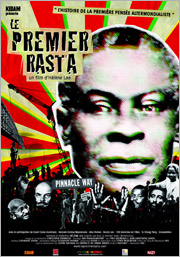
Le Premier Rasta, in cinemas on 27 April 2011.
Watch the trailer:
|
|


 © 1999-2026


 RSS


