
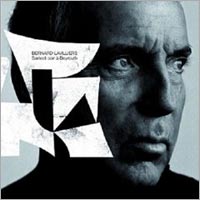
Listening to a Bernard Lavilliers album means accepting a journey. Four years after his Carnets de Bord, in which the Ivorian Rasta Tiken Jah Fakoly and Cesaria Evora, Cape Verde's "barefoot diva", took part, the singer-charmer proves it again with "Samedi Soir à Beyrouth", an album tinged with reggae-soul and a stripped-back tracklist (11 tracks). From the Lebanese capital, which he found again in a melancholy state in 2006, to Kingston, where he is now a regular, from his native land, France, to Memphis, Tennessee, Lavilliers tells of the world as he perceives it. While he allows himself a brutal, trashy conclusion on the rock of Killer (in which the all-powerful boss is pointed at), what one remembers above all from this "Samedi Soir à Beyrouth" is its soul subtlety.
It is the fruit of his collaboration with Willie Mitchell, musical arranger and emblematic producer of the Hi records label, which in the 1970s produced a host of Memphis soul artists (Al Green, Ann Peebles, Syl Johnson...). This gentle influence, flagrant on Ma Belle and Je te reconnaîtrai, recorded in the legendary Hi Recording Studio, is also palpable in Lavilliers's roots rhythms.
"Samedi soir à Beyrouth" reveals reggae in multiple facets. Surrounded by his accomplices Sylvain Taillet and Georges Baux, who handled the production of most of the songs, the impassioned Lavilliers takes mischievous pleasure in running through the genre. The dub accents of Rafales and Samedi soir à Beyrouth answer the ska of Solitaire. The pure roots of Ordre Nouveau and the unctuous calypso of Maria Bonita sit wonderfully alongside the guitar of Jehro, composer and co-producer of Bosse and Distingué.
In this ambient torpor, Bernard Lavilliers manages to distil lyrics that are certainly poetic, but above all grave, denouncing a violent and tormented world. Bosse is the perfect symbol of it. Slipping back into the skin of the worker he once was, Lavilliers paints, in his warm and suave timbre, the pitiless world of work. With repeated listens, "Samedi soir à Beyrouth" fills with meaning. Lavilliers's journey slides down like a mouthful of amber rum: subtle at first, then full-bodied, finally delicious. We return to the poignant Ma Belle. Until the next departure.